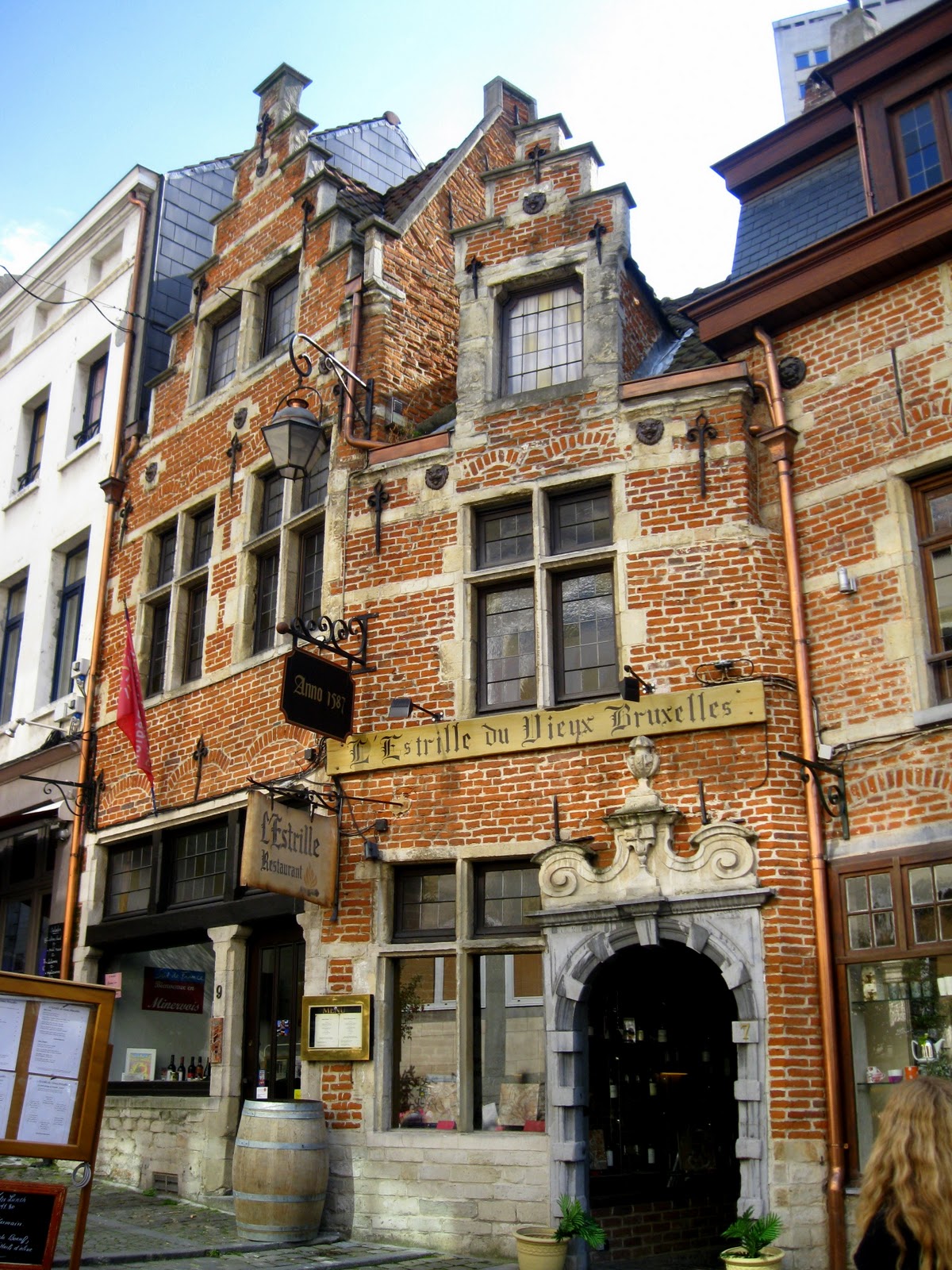
Showing posts with label travel. Show all posts

21 December, 2011

Security Angst


Nothing makes me want to sing the National Anthem at the top of my lungs more than being treated like a terrorist when I try to come into my own country. It may be over a decade since 9/11, but procedures for coming into the Police States of America (i.e. any place where the TSA is given authority to suspend any of our civil liberties it sees fit to ignore) have only gotten worse since I was in Rome in 2009. Back then, getting into Europe involved pretty much what it does now: you present your passport, present your visa, and they wave you on through. Getting into the United States, however, even for citizens, is even more of a headache than it was then.

Let's be honest here for a moment though; we Americans are lucky. If you're not Born in the USA, not only do you have to go through all the meticulous baggage controls, paperwork checks, etc; you have to be fingerprinted and get a mugshot. But that's okay, because you're not from the US, so you must be an Enemy (see movies like Taken for a great illustration of this attitude: if you're not American, you must be evil; not just evil, but an Evil Thing with a virulent hatred for all things American). Since, of course, there's no conceivably better way of securing our borders than taking fingerprints (last time I checked, all criminal acts were definitely committed by people with criminal histories...which makes me suspect that the criminal world must actually be an Underworld of Immortals, whose various rap sheets reach back to the beginning of time).

If you're American, other nifty things happen to you as you're attempting to return to your country. You go through security in Europe (which has the same requirements as the TSA, by the way), then you wait at the gate. But before you can board the plane, though you've had to show your passport about three times before even getting to this point, you need to show it again. Okay, so that's not so inconvenient, I admit. But what if the gate agents decide that you need another security check? While boarding my first Brussels-Atlanta flight, approximately every other person in line was pulled aside for a rifling-through of the baggage and an semi-assaulting of the personage (yeah, that thing that goes like this: . Fortunately I was not among them. But that didn't make me any calmer about seeing men with graying hair and women with white hair and high school students being treated like criminals and having to put up with it calmly for fear that the least complaint would be interpreted as aggression and suppressed. (Tell me again what's not police state about this?)

Of course, since the best way to protect our country from terrorism, illness, agricultural blights and a whole laundry list of other Curses of Adam is to make sure that we hermetically seal our borders, the ten hour flight following the first (two?) security checks is promptly followed by...I bet you can't guess...another security check. That is correct. With absolutely no window of opportunity available between the time you get off the plane (without exiting security), pick up your international baggage (without exiting security), bring a “imports affidavit” and your checked baggage pointlessly through another checkpoint where they actually check nothing before having you put it right back on a conveyor belt (without exiting security), there's still apparently sufficient danger that one of the frazzled passengers might have somehow picked up, I don't know, a bomb? a knife? something like that? under the watchful eyes of about five policemen per line. So guess what? You have to go through security again.

All of this makes so much sense to me. As I've said a million times before (fairly recently too, so I won't repeat in detail), possibly the most frustrating thing about it all is that it's so invasive while being so obviously ineffective. It might stop the most stupid of would-be terrorists. But a.) when you list all of the things you are going to check and all of the places you're going to search, it's kind of obvious that serious terrorists will seek other methods of attack. And b.) the checks as they are performed are so perfunctory, so shoddily done, that I really wonder what they accomplish at all. Take the huge “importation” check. They want to make sure that you don't have anything that could remotely pose a risk to public health or anything that could be “smuggled.” I suppose that's reasonable. So what's the most logical way to check for that? Obviously, have them give you a slip of paper saying “I don't have any X”, and then wave them through. Wow, look guys, I've saved the world! Why didn't I think of this before? We can ask people if they're doing anything bad and since lying is impossible, we'll definitely get an accurate answer.

The whole thing is such a mess, at least to the eye of common sense, that I end the hour-long process of getting off the plane “legally” hoping beyond all else that there's some behind-the-scenes justification for all this. That running gloved hands under the lip of an elderly man's jeans is somehow protecting us all from more 9/11's. And while I wish this so that at least the outrage of my common sense may be soothed, I can't ignore the fact that even if such tactics are achieving victories every now and then, victories that we somehow never hear about, we've kind of let the Bin Laden crowd win. Because if their goal was to “terrify” Americans (which is what terrorists do, no?), they've done that pretty well. Well enough that we're perfectly fine now with giving up more and more of our liberties just so that we can stay “safe”.

Last time I checked, America wasn't the Land of the Safe and Cowardly, at least not in theory. It was supposed to be “Land of the Free and Home of the Brave.” One has to wonder how many people still care to make the distinction.

15 December, 2011

Grocery Shopping in Europe

I've found grocery shopping here in Belgium to be a largely satisfying experience. The stores are well-stocked, many of the innovations of companies like Wegmans are already in place (Weigh and price your own vegetables! Saves so much time at check-out!), and the general quality of non-brand-name foods is much higher. The average price of food is, well, reasonable. Very much comparable with the United States in most staples, although perhaps a little expensive by Maine standards (milk's a lot cheaper than at home though).

Despite the similar prices of staples, however, for someone with rather haute-bourgeois tastes like myself, many things are a steal. Brie for only ten euros a kilo? A large block of Swiss for only two euro? You simply can't find good cheese for that price in the US. Unless it's cheddar. Which I will admit, I miss a little. But one eats cheddar all the time back home, and the chance to feast on baguettes and fine Trappist cheese is not to be missed. And then the wine and beer! Fine French wines for only seven to nine euro? Really, you can find a quite adequate one for four, and good cooking wine for as low as two. Beer is even better. One bottle of the Trappist Rochefort 10, widely acclaimed as the world's best beer, and absolutely phenomenal however it may rank, will usually cost around fourteen dollars for a glass at one of the select American beer houses that actually sells it. Here one can buy it for under two euro. Amazing!

Yes, I know...now I'm just taunting you. It's not really fair.

More seriously, what I've noticed on the whole is how dramatically the costs of importation affect the prices of food on the shelves. All of these gastronomic luxuries are near-untouchable in the States, having been brought in all the way from Europe. By contrast, American items that are imported are much more expensive than at home: cranberries, tortillas, and California wines being notable culprits.

Vaguely related to this phenomenon of expensive importation is the fact that eating locally here is the cheap way to go. Now, this I find rather fascinating, since that's not something that holds constant between America and Europe. In the US, it's usually the food snobs and the farmers who eat locally. "Local" food is très chic right now in America. It's supposed to be healthier, better for the local economy, etc. Which is probably (usually) true. But it sure costs a lot to do so. It means nothing to buy apples shipped in from California, but to buy Maine apples, you'll probably be paying a bit extra.

In Belgium, by contrast, the really dirt-cheap food is that grown or made in Wallonia or Flanders. That has its limitations, of course, because you can't grow nearly as much in a country whose climate is only slightly more temperate than that of my home state. But local milk, cheese, beer, leeks, etc, aren't very expensive comparatively. It's pretty easy to see some of the possible reasons for this. "Local" in a country the size of Maryland, means "grown somewhere in Belgium". That is, non-imported items are--no surprise--cheaper, but to not be imported in such a small country also means that the products in question are local.

In the US, not only can "non-imported" still mean 3300 miles away (distance from Sidney, ME to Los Angeles, if anyone wants a fun-fact); those non-imported items are often coming in from states which receive gigantic federal subsidies. Of course, this is just one more problem with those nasty subsidies that I complain about so often. Besides being bad for a government that can't even balance it's budget, farm subsidies do nothing whatsoever to encourage strong local economies, and they certainly don't help the "locavores", who are often, ironically enough, some of the bigger federal aid supporters out there.

Take an example: say that Idaho actually can produce potatoes more cheaply and in greater quantities than Maine (which one assumes is why in a state whose primary agricultural resource is potatoes, you generally find Idaho potatoes stocking the shelves). To transport the potatoes those nearly 3000 miles across the country, potato production doesn't just need to be a little cheaper; it needs to be a whole heck of a lot cheaper. How does this happen? Well, it can happen naturally of course, in which case I no longer have any complaints that are not rooted in my rather extreme local pride (haha). But when governments start giving money to the biggest farms in the country (i.e. the ones in Idaho, Texas, and California), it's dealing a crushing blow to small farms and really local food all across the country: how are you supposed to compete when farms from bigger states have not only their natural advantages to help them, but also the federal government giving them gigantic ($40 billion dollars worth since 1995) hand-outs? 

That's the end of that rant; I have to say, I find the whole "locavore" phenomenon to be ridiculously pretentious ("Oh yes, let us go out among the Quaint Farmers and eat Quaint food"), but the basic idea (eating local is good for the local economy and in some cases better for you) is one I agree with wholeheartedly.

 Back to the subject of grocery shopping in Europe. Here's a list of things that are hard to find here:
  • turkey
  • canned broth (it's either bouillon cubes or home-made broth, it seems)
  • "international" food (Asian especially)
  • peanuts
  • pumpkin
  • cranberries (not so much at my usual store, but in general, yes)
  • baking ingrediants--or at least the bulk sizes; I don't know why one would buy baking powder in tablespoon-sized packets; and vanilla extract comes in bottles the size of my thumbnail (no exaggeration)
Some interesting things about shopping here:
  •   There are "Carrefours" and "Delhaizes" open until evening, but then there are "express" versions of the same, much smaller and closer together and offering an opportunity to get in and out speedily. You don't usually have to walk as far to get to one of these, but the number of discount items will be much lower.
  • Not only do stores have "store-brand" items; for many things they also have "discount store-brand" items, which differ dramatically in price. A "Carrefour" pastry crust will cost a bit over a euro, but a Carrefour discount pastry crust will cost about 65 cents. Not bad. 
  • The largest size for milk containers is the liter. There are about 3.8 liters in a gallon, so you're buying not much more than a quart at a time. And it goes fast. On the bright side, whole milk here is deliciously creamy. And the cream! It puts whipping cream in the US to shame. US dairies generally skim off lots of the best cream and call the result "whole milk" and mix in the weakest cream with the top and call it "whipping cream". What a shame. 
  • The butter is Amazing.
  • Practically everything comes in cartons instead of plastic or tin. That includes milk (often), cream, pre-prepared soup, tomato sauce. The really odd thing about some of these cartons is that you have to cut them open with a scissors at one corner and then there's no way to re-seal them.
I'm not really sure why I think that this would interest anyone except the avid cooks among the readers (I am sure of only two of these). But there is a general wish that I would post more about Belgium, and this is what I have to say.

08 December, 2011

Belgium: Advice to a Tourist

Someday I'm going to write a coherent travel post instead of going the default "post interesting links and comment on them" or even the "write 3000 words on the economic crisis and then realize you still missed one of the big points so you never publish it" route. For now, having come home in a jolly mood from the Marché de Noël à Place Ste. Catherine, I will make a list.

There are already plenty of lists out there informing the novice traveler of "dead-giveaways" to their American nationality. Some of these are good points, but generally speaking, the list will be composed of a series of vile behaviors that characterize only the worst stereotype of "the American" (unfortunately all-too-common a breed in Paris, Rome, and other major tourist destinations, however; the stereotypes have to come from somewhere!). I am not going to make such a list. Rather, I'll note a few things that one learns here. Things that one learns to avoid, and things that one might simply find interesting.

However, allow me to get sidetracked for a moment by a brief observation about one item that invariably appears on the novice-traveler-do-not list. It's the infamous "portion size complaint"; i.e., Americans think European portions are too small and will often betray their nationality by complaining about it. This complaint consistently mystifies me; portion sizes, at least here in Belgium, tend to be substantial. In France too. And certainly in Germany, where you're usually served a sausage bigger than your plate with a mountain of one variety or another of cabbage and another of potato. In fact, I can safely say that I've yet to eat in a European restaurant (remember, this is including France too) without regretting the continent-wide incomprehension of take-home boxes. Since I like my money, I'm not about to just leave the food on the plate. Most certainly not. I'll doggedly finish it, thinking "ah, well, this'll take care of breakfast tomorrow too"; but it takes herculean force of body and will to do so. European portion sizes (restaurant edition, in any case) are not, in general, small. So why the complaints? Because you do hear them.

Hang on a sec; I feel a brilliant theory coming on...maybe...I know what I'm saying is revolutionary and all, but just maybe...if you don't eat on Montmartre or right by the water on the left bank of the Seine or right beside the Trevi fountain...maybe you'll get better food and better portions. I know it's tough to believe that the restaurants abutting the world's most popular tourist destinations would be bad. But. They. Are. Some restaurant owners in Europe have this idiosyncratic weakness for making as much money as possible with as little effort as possible. Owning a restaurant in the right Location can be the financial equivalent of striking oil on a Texas ranch. You, as the owner have very little to do beyond procuring very cheap ingredients and making sure that whatever comes out of the kitchen does not kill the stray dogs begging at the back door. If these tests are passed, you go outside, put chairs near the Seine, write a menu in something that looks like French, and you're set. The money will come pouring in, because you are where the tourists are and tourists eat whatever is There. These are, after all, people who've been traveling, who are looking to "relax", which apparently in some peoples' minds means "not have to walk", and who are Hungry. It's the perfect formula! Once they're lured in by the Location and those enticing menus, all you have to do is take the order and send out a platter of just-unfrozen synthetic material, portioned as though it was being served at the orphanage in Oliver Twist.

The advice, then that my Wellspring of Wisdom offers to the unseasoned tourist is simple: walk a few blocks. Better yet, get some recommendations online (though that can be tricky if you aren't practiced at distinguishing between the "undiscriminating tourist review" and the "seasoned traveler review"). Most websites cheerfully tell you to "ask a local", but, coming from a tourist-region myself, I can assure you that the last thing a "local" wants to spend his day doing is tour-guiding (unless you're an Honored Guest, in which all that changes). Supposing a local even knows what the top restaurants in his area are (often he won't; locals use supermarkets), if he wanted to work in the tourism industry, he'd probably be doing so. 

However, I wasn't planning on writing for the unseasoned tourist. After that lengthy segway, here's my partial list of Items of Useful Knowledge for the visitor to Brussels.

  1. Don't go into a superstore just to "look for something". All-purpose chain stores here put Walmart to shame with the inexpensiveness of merchandise and the poor quality of the same, yet they are major shoplifting targets all the same. To minimize the number of people just walking out with things, these stores have one-way gates at the entrances: you can get in, but you can't just walk back out. To leave, you need to go through the checkout line. All well and good if like everyone else you're buying something. But it looks quite awkward if you decide that the adaptor plug you seek is not there. Then you're stuck either shoving past people to get out, or queuing up quietly yet purposely until the person in front of you has finished checking out. 
  2. Don't be taken aback if one of the first things a person inquires about upon making your acquaintance is the nature of your political opinions. It's not taboo in Europe, and neither is debating about said politics (or debating in general, for that matter). If you're an American, you get the added bonus of a captive audience, fascinated to know whether the "media America" is anything like the real one, and to what extent. Do emergency rooms really turn people away because of a lack of free healthcare? Are radical, fundamentalist preachers from the South really in control of the country? Is everyone in America really rich? Etc. It's amazing to see the effect our news sources and their habit of focusing on the most sensational stories have on European perceptions of America. 
  3. Also on a political note, don't assume everyone is 100% on board with the E.U. Most are fine with it in some form, but not insofar as it threatens to erode their national identities.German national identity, fine, (unless you're talking to a German, I assume), but theirs, no.
  4. You can get anywhere without a car. But don't assume that that will be easy, especially if your destinations of choice are off the beaten track. Missing the last bus out of a tiny town can be a bit of a bother.
  5. When you go into a restaurant or cafe, seat yourself (though it's a good idea to make sure the waiter knows you're there, and maybe to wait around just in case he has a preference regarding where you choose to sit). Even the most basic cafes have waiters, so there's usually no going up to the counter to order. They'll come to you. 
  6. There are exceptions to the above, but they're easy to identify; usually pretty obviously modeled after the American "Starbucks-type-cafe", and prominently advertising their free wifi. This type is usually overrun with students, so you can just do what everyone else is doing.
  7. Also on the subject of cafés, know that a "café" is black, a "lait russe" is coffee with warm milk, a "cappuccino" is a small, strong drink topped with a mountain of whipped cream, and a latte usually comes in a tall, narrow glass that makes the foam look very thick indeed. All such beverages come with a cookie or chocolate.
  8. Different beers have different glasses. If a place serves you a beer in the "wrong type of glass", you've been lured into a tourist trap. Run.
  9. Don't get too excited about Christmas Markets. They're "just" Christmas Markets. Yes, they serve warm spiced wine at almost every stall. Yes, they serve foods like quiche and oysters and tartiflette and sauerkraut, et al. Yes, there's a skating rink and ferris wheel. What's so unusual about all of that?
  10. Thanksgiving is best explained with reference to the romance of John Alden and Priscilla Mullins.
  11. Don't be afraid of your accent. As long as they can understand you, most Europeans apparently find the American accent "adorable". Or at least francophones claim that this is the case. 
  12. Do wear a nice jacket in the winter. Scarves are essential. Hats and gloves recommended. Incidentally, Brussels is filled with hat shops, which make me long for the days when everyone wore them. They really do look nice, and a wool hat on a guy is a sure sign of Excellent Taste.
One of the nice things about living in a place like Brussels is that if you know basically how to dress and how to get around the city, you won't stand out as an outsider at all. It's a very international city, many of whose residents are here only temporarily (E.U., NATO, one of the three American ambassadorial commissions in the city, etc). So you'll almost certainly look like a pro compared to the rest. Way back in September, on my second day here I was already being asked for directions by hapless visitors. Six times that day, if I remember correctly. And when you speak to a francophone Belgian, chances are that if you speak with sufficient confidence he or she will take you for a Belgian from Flanders, since the Dutch and American accents are apparently quite similar. Quelle chance!

03 October, 2011

Belgium, A Bit of History

There's far too much to tell for me to go into detail about my experience of the first two weeks here in Belgium (where I am studying, for those who haven't heard, Belgian Symbolist literature at the Université Libre de Bruxelles, courtesy of a Fulbright grant). Nor do I have any single anecdote that sums up my first impressions of the country adequately. It's a complicated place, like every country with about 2000 years of recorded history, and perhaps is so even more than some given its history of being handed off from French noble to French noble and then from large empire to large empire for hundreds of years before gaining autonomy and a separate national identity in 1830.

First there were there was Charlemagne, then a long line of French nobles (and a few English and German ones tossed in, in places), then it sort of slid into being part of the Burgundian Netherlands, which was sort of French, sort of Dutch. After that, Charles V of Spain acquired it with his accession to the seat of Holy Roman Emperor. It doesn't seem like the Spanish Hapsburgs left a very large legacy, beyond the renaming of the prison in Brussels the "Amigo," due to some complicated linguistic confusions. Then the Austrian Hapsburgs came around; the Belgians tend to resent their legacy a bit, since they left the entire "Mont des Arts" region in Brussels littered with the gigantic, uniform, white buildings that Austrian emperors seem to have loved, but which the Belgians, with their idiosyncratic houses and fondness for small canals and small cobbled roads find aesthetically offensive. Also contributing to the unpopularity of the Austrians (and the Dutch, and the Spanish to an extent) is the fact that they made it into the front line for fighting the French.

Of course, the French contributed to that as well, which makes them similarly unpopular in Belgian historical accounts. And the French became rulers of many different parts of the country at many different times as the war proceeded. Hapsburg rule ended definitively, in fact, just after the French revolution, when the newly-formed French army (well before Napoleon was anyone to speak of) crushed all resistance in that area and threw out the Austrians.Unfortunately, since they were revolutionaries, they also did lots of nasty things to the churches all through the area, which is one of many reasons (the Germans being another major one, later on) that while almost all church buildings date from the gothic period, few of them are gothic in the interior--they were generally pillaged thoroughly and the Belgians would be obliged to replace the insides with decorations of the early-nineteenth century style.

Belgian was soon handed over to the Netherlands, but finding King William's rule to be despotic (both anti-Catholic and anti-democratic), the Catholics and the Freemasons united (for what may be the first time in the history of Europe; it had already happened in the American revolution) to throw off his rule in 1830. At first only the French, the Polish (quite a few Polish refugees actually fought for Belgian independence) and the USA recognized the country's independence. GB and the rest took nearly a decade to do so. Interestingly, one of the consequences of the US's early recognition is that the USA has it's second oldest ambassadorial residence in Brussels. A very nice place dating from the early-mid 1800s, to which I have actually been for a very classy reception honoring Fulbright peoples.

Being small, and not exactly possessing the most impressive of military forces thanks to its size, the country basically tried to remain militarily neutral for the remainder of the century while strengthening itself economically. That, as most know, became impossible when the 20th century and its two World Wars hit.

Now, regarding WWI, I've always seen Germany as being on pretty much equal footing with the allied powers morally speaking. The politicians on both sides were essentially responsible for a brutal, pointless war in which millions of lives were thrown away for (almost) nothing, leaving Europe (in a way that Americans who insist upon being snotty about the Continent during WWII will never understand) depleted, disillusioned, and traumatized. But really, despite my view of 1914-18 Germany in general, I have to admit that they were vicious to the Belgians. The whole concept of "Prussianism" really was a precursor to Nazism in the sense that it was already starting to see Germany as everything and the non-German as inferior. Hence the policy of going into towns, destroying the libraries, shooting city officials, soldiers, priests, and professors indiscriminately, and then instituting draconian punishments for resistance. It goes without saying that a lot of Belgian churches suffered at that time, as well as universities and other cultural institutions. And it also goes without saying that all the brutality of WWI was pretty tame in comparison with what would happen to the country in WWII. It's no wonder that almost none of the churches (if any) have their original stained glass (and that is a great loss in a gothic church).

Today the Belgians generally seem to pride themselves on a dry, skeptical sense of humor, their fantastic food, and the fact that they still exist after all that. They hate being mistaken for Frenchmen, and they hate being mistaken for the Dutch. They have, as is often reported, and which I can declare to be absolutely true, fantastic beer.

02 October, 2011

Bruxelles: A Few Pictures

Click on the photos for larger versions.


Grand-Place is Brussels' most iconic sight; an ornate town hall at one end of a large square, whose area is demarcated on the other three sides by equally ornate buildings that were at one time guild houses. The guilds were extremely important in medieval and renaissance-era Brussels, and the guildmasters seem to have had almost as much prestige as the burgomeister...though it was the latter who had the final say in most political matters, and who usually had enough autonomy to stand up to the more powerful "rulers" of Belgium, be they the Dutch, the French, the Spanish, the Austrians.


 Part of the facade of the town hall. If you look closely, you'll notice that the wings on either side of the tower are not identical. That's because they were built at different times; the left one in the early 1400s, the right one about fifty years later. There's a silly legend that the architect who designed the tower, Jan van Ruysbroeck, threw himself off of it in despair when he discovered that the resulting building was assymetrical. Ridiculous, because the truth is simply that around 1400-50, people weren't obsessing about architectural symmetry like they did during the High Renaissance. The second wing was built later, its size constrained by the surrounding buildings, and that's that. Nothing to worry about, from the late Medieval perspective. I bet its one of those stories that British 18th-19th century tour books liked to make up to catch the attention of the jaded, xenophobic aristocrat-tourists of the time.


 Detail of a corner of the town hall. No, it's not a church, and those aren't saints. The statues are of "prominent citizens", I believe. These Belgian towns remind me of the mercantilely-oriented city states of Venice in the reverence that they seem to have held for good citizenship and good bargaining.


The tower of sensational "history" described above.


 Belgians are extremely proud of their comics, especially Tintin. And the excitement here about the upcoming movie adaption of that comic strip is astonishing to see. Probably because you don't get a Belgian cultural icon making it big in the movies all that often.


A fragment of the old city wall. The wealthier citizens of the time were paranoid about the possibility of civilian revolt, so they designed the wall to have towers that were open on the side facing the city center. Hence fractious citizens wouldn't be able to take the walls and besiege the insiders from that defensive point. 


French bombardment during the late 1600s under the Duke of Villeroi destroyed nearly everything in the city center except the town hall, which the duke had ordered his artillery not to hit, since its tower made such a good target.  It's when you start moving outside the boundaries of the old walls that you start finding older buildings like this.


Notre Dame au Sablon. Definitely my favorite church in the city, and the only one that still has decent stained glass (though I think it's a replacement, like the rest...it's just much better quality than the rest). It has a full Gregorian Chant Mass every Sunday at 12:00 which I'm looking forward to going to on those weekends when I'm not traveling to another city.


 Parc au Petit Sablon. I don't just love the church there, I love the whole Petit Sablon area; there's a beautiful little park, an excellent pastry shop, lots of art places, almost all the city's best chocolatiers, and some of its best restaurants.


A view of Notre Dame au Sablon from the Park.


The city as seen from Mont des Arts, a hill covered with Austrian buildings that were once palaces and are now mostly museums.


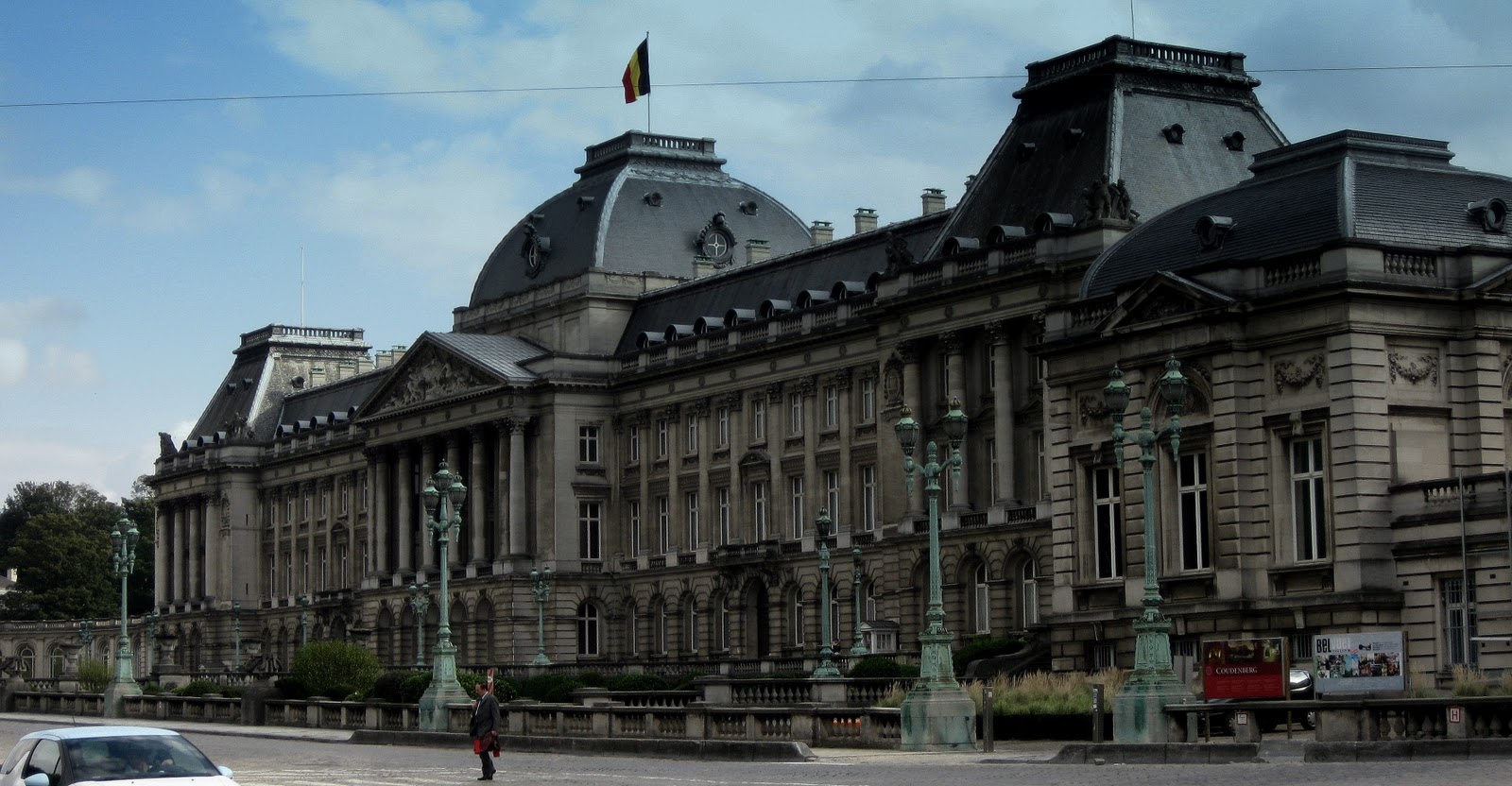
The Palace Royale. The flag means that the King is in the country.


 A picture taken in some rather dramatic lighting of a church near the hotel where I stayed for the first week.


Belgium has Very Good Food. This is one of my personal favorites (other than a lovely seafood stew of sorts involving herring, salmon, eel and shrimp) so far: penne avec foie de volailles et champignons (with chicken liver and mushrooms).


Ste. Catherine. Not a great place to go for Mass, sadly. On the crazy side of things.


Place Ste. Catherine. A long, rectangular plaza where the canal used to be before they filled it in. Now there are some large fountains and pools there instead. Plus lots of seafood restaurants.


They light up the Grand Place at night, and it's lovely.


Before electricity, the tower was still lit up on special occasions. Only back then someone had to climb to the spires and light the stacks of wood there on fire. Lord of the Rings, anyone?


Lunch. One of the nicest things about the country is that people are seen drinking beer at all times of day, and yet you never see drunk people unless they're part of one of the many British bachelor parties that come here late at night for the inexpensive beer and behave obnoxiously. There's absolutely no social stigma associated with drinking at midday, or even in the morning. People sit around at cafés, having a glass with a friend, having a glass with a meal, and just enjoying the fact that it tastes really good. I think the reason we have such a drinking problem in the USA is that we disapprove of it so highly; it's something that teenagers do when they want to rebel, something that people do secretly, almost shamefacedly, unless they're at a party in the evening--and then you hear lots of "I'll just have one" "I never really drink" "I guess I can allow myself to have some fun" "Well the kids aren't here, so..." Whereas if you grow up seeing people drinking it in moderate quantities as one of those great things that we can enjoy as long as we don't overdo it (which even goes for food in general), there's a much healthier attitude in the population as a whole.


View looking up towards the Mont des Arts. Just beyond that you'll find all the ambassadorial residences, the palace, the political buildings, and the EU.


Random statue of Samson in the park near the Merode stop.

24 September, 2009

Some views of Venice

 
In front of San Marco


Gondolas: available for rent at the low, low rate of 60 euro a half hour!

 
One of innumerable bridges over canals


Marino, the glass-blowers' island

Posted by Picasa

18 August, 2009

Boston, MA (as if there were any other Boston)


So just prior to my family's epic hike of Katahdin, I decided to spend a day in Boston, both to look around the city, and to visit a friend from Chicago who's staying there for about three weeks. My sister was going to come with me, but she chickened out (jk Mary!), claiming that she would need more than four hours of sleep before hiking Katahdin (what nonsense!). So another friend from Maine who had spent the summer doing biochem research in Boston came along instead.

It was quite a lot of fun going down there at any rate, and considering that Katahdin turned out to be hikeable on what ended up being about 3 hours of sleep, the trip was less rash than it might sound. I travelled down on the new bus line that extends from Augusta to Portland and then on to Boston. (Huzzah for the introduction of some basic public transportation to central Maine!) Basically this meant getting up at 4:30 to ensure that I could catch the 6:15 a.m. bus, a rather tedious hour-and-a-half-long ride to Portland, a bit of a wait as the bus became crammed with so many passengers in Portland that the friend who was supposed to travel down with me couldn't board, and then another couple of hours spent watching "Mr.Bean's Holiday" without any sound.

Then Boston, South Station; and the epic Revolutionary War era site-seeing commenced. Well, actually I at first only walked to the Old South Meeting House, dating from 1729, and famous for Sam Adams' planning of the Boston Tea Party there in 1773. That was while I waited for my friend to arrive on the next bus. Once she arrived, we went to Mass at the cathedral, lugging backpacks all the way in pretty sweltering heat, but finding the beautiful church worth the trouble of getting there.

Lunch in Boston Commons was nice; it cooled us off a lot to be able to just sit around on the grass and talk and eat carrots and fruit and homemade bread with peanut butter for a while. We followed that up with a walk towards Faneuil Hall, through Quincy Market, and to the wharf, which was much cooler and another nifty area with a most Bostonian feel to it. Once we met up with my other friend, we went towards the North End, which is both Little Italy, and a site saturated with Revolutionary relics. Now Little Italy was particularly fascinating this day because there was a celebration in honor of Our Lady going on, and it seemed like the entire section of town was out to celebrate. There was a huge procession carrying a statue of Mary and Jesus on a litter covered with streamers and a canopy. The procession moved through streets crammed with vendors selling canoli, Italian ice, gelato, and practically every other Italian-American food known to man, and it would stop every few yards as children from overhanging balconies would shower it with pounds of confetti and streamers, people set off fireworks, and one of about six Italian-American marching bands would play. Each time it stopped, the men carrying the litter would pass long streamers to the crowd, and people in the crowd would tape dollar bills to the streamers until they were full. Then the resultant money-chains would be taped to the litter like decorations. Definitely the most unusual thing about the entire celebration.

Nothing else was quite as exciting as that, but we did get to see (not for the first time for me) Paul Revere's house; the Old State House, oldest public building in Boston, dating from 1713; the Old North Church, where we marveled at the fact that families would come to church to sit in cubicles; and the Copp's Hill Burying Ground. All good stuff, which helped to refresh a little of my elementary school American revolutionary history, and reignite my interest in that period.

No recounting of a trip would be complete without a brief overview of food consumed; for dinner this day we went to a bakery, bought a loaf of bread, then bought some tomatoes, cheese, and an avocado at a grocery store and ate near the harbor where some musicians had set up and a moderate number of people had gathered to listen and enjoy the growing cool of the evening.

26 July, 2009

Let the battle begin!

I know, I know. Given the current maelstrom of public policy coverups, attempts to socialize our health care, and other random bad news from the political realm of the good old USA, you might be expecting the title to be serious. You never know - I have been known to branch off into politics before if the situation was aggravating enough (as it jolly well is now). But that's not my concern at the moment. (And before I begin arguing against the proposed national health care, I want my facts sorted rather more neatly than they are now.)

When I say battle, I mean, all-out paintball war!!! Who'd've thunk it? Ostensibly quiet, reserved me turning into a paintballing maniac. Well, I'll admit that there is a good handful out there in the world who might have suspected. But, hey, this was totally sweet! A family in northern Illinois invited all 20 something of us counselors and teachers a few weekends ago to their house for a couple of days just so that we could enjoy their epic-awesome paintballing paraphernalia. They're actually a family that I already knew slightly from UD - one of the classic dynasty families with a sibling graduating nearly every year for about ten years. Pretty awesome.

They have a house near a largeish pond, and for the paintballing, after we got all geared up, the dad and one of the daughters (a recent UD grad!) took us out to a thickly overgrown island just off shore. The actual wars lasted only about 20 minutes each, but we had 4 or 5 of them in one afternoon, and given the strenuousness of even moving a couple of feet while staying undercover, that was plenty. Just to brag a little bit, I have to say that I was pretty amazing at sneaking. I would come up about a foot away from on of the other team's snipers and then they would have to fall back out of position as I hooked around and snuck up further.

It's acutally not quite as great as it might sound, because when you get that close, you can't fire at all...so it wasn't completely effective. Add to that the fact that I used less than a quarter cannister of ammunition per game in my enthusiasm for thriftiness. Ah well. C'est la vie. It was jolly fun overall.

17 June, 2009

Chicago

So to elaborate on the esoteric reference in yesterday's post, I will give a brief explanation of where I currently am and why.

Location: Chicago, Illinois
Mission: To help mentor and tutor inner-city kids in basic academics and to encourage character formation: good habits, acquisition of good goals and virtues, etc. I'm doing it through a program associated with Opus Dei.

However, I won't discuss that much because it's work and people's privacy is involved and all that. Rather I'll focus my attention on jotting down some impressions of the "Windy City" (which actually is very windy just now, though the city was nicknamed that not in reference to gusty weather conditions, but to loquacious politicians). Not that I'll be writing a lot. As usual, the vast majority of my time will probably be occupied, partly by the program, partly by the fun evening activities we counselors will be doing as a group.

I must say, it strikes me as a very nice city. Other than Boston, I haven't had much contact with American cities, and this is nothing at all like Boston or anything I encountered in Europe. It has a pronounced skyscraper skyline, a forest of surprisingly aesthetically pleasing buildings towering hundreds of feet above you. It's a clean city, especially compared to Rome which, like most Italian cities, has the less-charming side of being rather filthy. And like Syracuse, NY, my mom's childhood homebase, it has a multitude of small ethnic neighborhoods with lots of good ethnic food and families who have lived in the same area since their grandparents got off the boat.

This night we went to get Italian ice (something unknown in Italy, as far as I remember) in the Italian quarter. The place was this tiny family-owned shop tucked at the corner of a row of rather nice apartment buildings. "Mario's" it's called, and the real Mario himself came out and regaled us with a long story about how his dad started him in the business - making lemonade and selling it for 5 cents a cup on the sidewalk - when he was six because he was too hyperactive in school. He proudly told us of his refusal to use computers, palm pilots, calculators, or anything remotely technological (he keeps his accounts on a cardboard box because it doesn't get lost like small scraps of paper do), and his even more vigorous refusal to make it into a franchise, despite his kids' solicitations. What made the tales he spun especially entertaining was the classic Italian American accent he told them all in - all in all, it seemed like he could have stepped right out of the movies (some of which - he said - were supposed to include his stand, but whose directors were firmly turned down when they wouldn't let his own workers stand in as the Italian ice sellers in the movie).

14 April, 2009

Ireland

We're here in Ireland and having a marvelous time. The center here has computers, so I'm writing from one of those. We spent almost all yesterday wandering around Dublin and seeing some of the more well known sites, such as the James Joyce and Molly Malone statues, the Oscar Wilde House, the now-protestant Christ Church (built in 1038) and St. Patricks (built around 1100), Dublin castle, St. Stephen's Green, O'Connell St., and a few other things. The city is absolutely charming, especially compared to the sketchiness of Rome - very clean (street cleaners everywhere), quite colorful, and filled with lovely brick architecture and brightly painted doors. We ate at a bakery for lunch, where they made us sandwiches and tea (at long last, tea again!), and everyone was very friendly.

At the center where we're staying (perhaps a half-hour bus ride outside of Dublin), everyone is also extraordinarily friendly, as is usual in such places, and even more talkative. Mary's friend, Noreen, came all the way across the island from Galway to welcome us for the day, and we talked to her about the various sites and history of the places we were considering a visit too. This house here is gigantic: it rooms about 70 people in various corners.It's ancient and cracked in places, but the chapel is lovely and made with lots of green marble, the breakfasts (which Meg, Chelsea, and I helped prepare this morning) are delicious, and as I've said already, the friendliness is like nothing I've seen before.

The general plan for today was to catch a bus down to Glendalough to see the ancient monasteries there, but as it turned out, we got back to Dublin too late to catch the latest bus. So instead we went to Enniskerry, a tiny town rather near Glendalough and the Wicklow mountains, and headed for the famous Powerscourt Waterfall there. The guy at the bus stop in Dublin said it was a bit of a walk from the stop in Enniskerry to the waterfall. It ended up being about 5 miles out, so we walked all told, well over 10 miles total today. It was a lovely walk through some very green sheep country, and despite the fact that the road was exceedingly narrow and had no shoulder, we finished the journey in no more than six pieces.

The day ended uneventfully in a pub, where two of us ate some very delicious Irish lamb stew with Guinness bread, and others had either chowder or lamb-and-vegetable pie.

22 March, 2009

The Church of St. Nicholas at Bari


The iconography at this church was occasionally rather unusual. One example is this sculpture of two oxen on either side of the church's main door as if they were dragging the church along behind them, just as two real oxen had transported St. Nicholas' relics to Bari in the first place.


16 March, 2009

Greece

Greece was marvelous. This is the verdict that will unabashedly color the rest of my accounts of the ten day trip our class took to the area of the Gulf of Corinth.

We took two buses down the Italian peninsula to the coastal city of Bari, where we made a brief stop at the church of St. Nicholas, which contains his relics and a Russian Orthodox chapel donated to that Church by John Paul II. Not much later, we were on a gigantic ferry heading over to the Greek port of Patras.

As it happened, we hit the stormiest weather on the way that any UD class has seen within the memory of the current faculty. This made the ride very amusing and interesting - for the about 10% of the group who didn't get violently ill. I spent lots of time out on deck, a little inside reading, and felt fine. There were two enormous water spouts that passed within a mile of the ship, and that was pretty entertaining to see. It's also very amusing to stand out on deck and let yourself fall forward into the wind: generally, it's strong enough to entirely support you.

We stayed overnight onboard and didn't land until 2:30 p.m. because of some delays due to the storm. More bus rides followed until we finally made it to Olympia, ancient site of (you'll never guess...) the Olympic games. The hotel was nice, the food was good (probably the most Greek that we'd get over the course of the trip).

Our next day was devoted to exploring the museum and archaeological site just on the outskirts of the rather shabby and obviously not wealthy town. Olympia had been a major pilgrimage site in ancient Greece, and its Temple to Zeus was one of the largest in the ancient world. There would have been bath complexes, multiple temples, treasuries, etc. - the games had a religious origin, and preserved this connotation far into the later years of ancient history. In early Christian times, the site was combined with a Christian shrine, and remained something of a pilgrimage site until an earthquake leveled everything in the time of the late Roman empire. The stadium is still extant, and the best part of the trip was when we got to race three times there: one men's race, one women's and one mixed relay.

The prettiness of the area completely validated our decision to come in the spring. There were daisies, bright red wild poppies, and some type of unfamiliar purple flower all through the ruins. Also, I ought to observe that olive trees are remarkably pretty and are everywhere.

28 February, 2009

Cinque Terre, part II

The morning after our arrival, one of my friends and I got up at 5:00 am to see how things looked at about that time. We walked around in some rather icy wind for about 2 hours until the sun came up and the rest of our group was ready to head out for the day, but the area was gorgeous at that time: everything was quiet except for the sea and the wind, the moon was high over the bay, and the harbor with all its moored boats was lit only by two yellow lamps.

These pictures give a general idea of how things looked as the sun came up. I know the last one is crooked.


Anyway, early in the day we went shopping for food. There were three small grocery stores on the street which had their produce displayed out in front, and there was a fish truck on the side of the same street. We bought foccaccia and brie for lunch, and then for dinner ended up with two fresh fish (scales and everything still on them), several tomatoes, butter, a clove of garlic, pasta, zucchini, more bread and cheese, a bottle of wine, and a few other things perhaps. It was a bit tricky buying exactly enough food to use up in one night, which explains why we used butter instead of a huge jug of olive oil.

We left all that in the kitchen of the hostel, bought some tickets to get into the national park area, and went hiking. The hike was breathtaking. It still is, presumably, but our weather made it particularly nice. It basically consists of a walk (not much of a hike at all to be honest - it's too flat and easy) along the very edge of the cliffs of Cinque Terre, and connects all the towns. Unfortunately, only one part of the path was open at this time, because it was off-season, and rockslides had completely knocked the path off the cliff face in most of the rest of the park (which, to those who were wondering, is one of the reasons we couldn't have jumped the fence and walked back anyway, even had we been able to get unanimous assent to such an activity). We finished the walk and ate lunch on the way (recall the lovely bread and brie - a half kilo for only eight euro!). In the neighboring town we just strolled around the paths through the terraced areas and explored a bit before my foot began to get sore and we turned back. (Ah yes, that... for the record, I sprained my ankle playing capture the flag about a month ago: it's still sore, but I can walk on it no problem now. Then it was only a week after it happened, and my foot was still about 1 and a half times its normal size.)

We spent the rest of the afternoon reading the Oresteian trilogy and studying for a Theology test on the beach at Riomaggiore, and after watching the sunset (absolutely spectacular in itself; see below), we made dinner.

Ahhh, dinner. It was marvelous, despite the lack of basil or oregano for the sauce. We used garlic and some of the rosemary that we picked (it's used as groundcover here: it grows everywhere!) along with the tomatoes and zucchini to make a pasta sauce. The one guy who came with us (the brother of one of my roommates) scaled and cooked the fish, and other people watched the pasta. Then we roasted some garlic and mixed it with melted butter, spread it over the bread, and toasted it in the oven to get garlic bread. Incredibly simple and delicious.